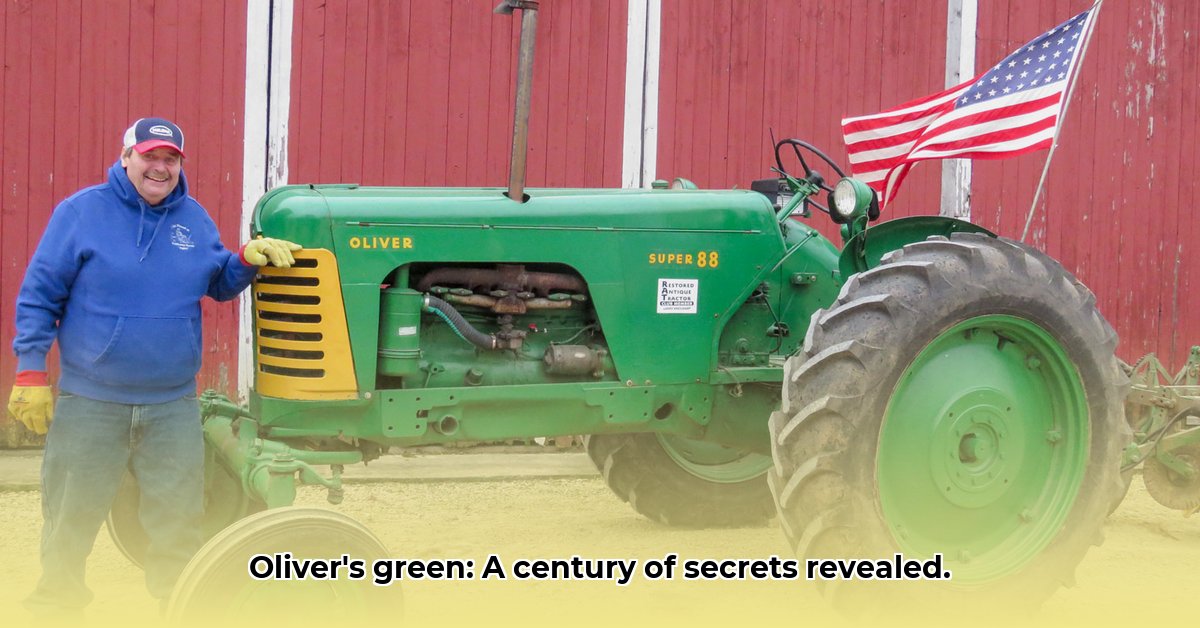
The iconic green of Oliver tractors isn't merely paint; it's a visual narrative spanning a century, reflecting evolving design aesthetics, technological advancements, and the enduring spirit of American agriculture. This deep dive explores the fascinating evolution of this distinctive hue, from its utilitarian origins to the challenges faced by collectors today. For more detailed information on Oliver green, see this helpful resource.
The Roots of Oliver Green: A Practical Beginning
Long before Oliver became a household name, its predecessor, the Hart-Parr Company, utilized a shade of green on its farm machinery. This early green, often complemented by striking red wheels, was primarily a practical choice. A dark green effectively camouflaged dirt and rust, a constant concern for farmers. Functionality, not fashion, dictated the initial color selection. This pragmatic approach laid the foundation for the brand’s future identity.
1937: A Democratic Approach to Tractor Design
The 1930s marked a significant shift. Oliver, recognizing the importance of customer connection, launched a groundbreaking color contest in 1937. This wasn't a mere marketing ploy; it was a strategic move to directly engage farmers in the design process. By involving users, Oliver fostered brand loyalty and demonstrated a commitment to customer input. This innovative approach highlighted the growing importance of visual appeal in the agricultural machinery sector.
Post-War Optimism: The Dawn of Meadow Green
Following World War II, Oliver's tractor green underwent a transformation. The harsh, utilitarian green yielded to a softer, more appealing shade often referred to as "meadow green." This lighter, serene tone perfectly encapsulated the post-war optimism and prosperity sweeping across America. The color change mirrored the nation's collective mood—a transition from wartime practicality to a more hopeful future.
The Challenge of Matching History: A Collector's Quest
Precisely identifying the shade of Oliver tractor green across its history is surprisingly difficult. Paint formulations varied considerably over the decades, and comprehensive records are scarce. For dedicated collectors, restoring an Oliver tractor to its original condition requires meticulous research and an almost detective-like approach. Finding the perfect paint match involves navigating inconsistent information and faded paint chips. A centralized, collaboratively maintained database would prove invaluable for those seeking authenticity.
"The lack of readily available, accurate paint information makes restoring these tractors an incredibly challenging endeavor for collectors," says Dr. Amelia Hernandez, Agricultural History Curator at the National Farm Machinery Museum.
A Collaborative Effort: Rebuilding the Past, One Shade at a Time
The pursuit of historical accuracy isn't a solitary undertaking. It demands a collective effort involving collectors, historians, paint manufacturers, and museums. Sharing knowledge, comparing samples, and utilizing advanced spectral analysis are crucial steps in this collaborative restoration project. Only through joint efforts can we ensure the legacy of Oliver's iconic colors continues.
The Future of the Green Machine: Preserving a Legacy
The ongoing effort to preserve and replicate Oliver's iconic green transcends mere nostalgia; it represents a commitment to safeguarding a significant piece of agricultural history. These tractors, painted in their distinctive green, embody hard work and innovation. The dedication to achieving historically accurate restorations highlights the importance of preserving our heritage.
How to Accurately Match Original Oliver Tractor Paint Colors
Key Takeaways:
- Oliver tractor green's shade varied significantly across production years.
- Commonly used names, such as "Meadow Green," often lacked precision in defining actual hues.
- Finding the exact original paint is challenging due to inconsistent paint formulations and age.
- Multiple paint codes exist, but their accuracy is debated among restoration enthusiasts.
- Careful color matching using original paint or expert consultation is crucial.
A Century of Shades: Tracking the Evolution
The journey to accurately match original Oliver tractor paint begins with understanding the color's evolution. Early models (pre-1951) sported a rich, deep green. Over time, this hue often lightened. These variations stemmed from factors like changes in manufacturing processes, different paint suppliers (including PPG, Martin-Senour, and Agco), and even sun exposure.
Decoding the Paint Codes: A Collector's Dilemma
While many paint codes circulate among enthusiasts—such as PPG 925-955, Martin-Senour 99L-3751, and various Agco and Centari codes—their accuracy is debated. These codes may not always precisely reflect the original hue due to variations in manufacturing, ingredient changes, and how colors appear on different surfaces.
Matching the Shade: Strategies for Success
To accurately match original paint:
- Seek Original Paint: Locate an original, protected paint sample from your tractor or a similar model for the most accurate baseline.
- Consult an Expert: Experienced automotive painters specializing in classic vehicle restoration can provide invaluable assistance.
- Test Thoroughly: Always test the color on small, inconspicuous areas to ensure a proper match under different lighting.
- Use High-Quality Paint: Invest in durable paints with UV resistance for long-lasting results.
- Collaborate Online: Utilize online Oliver tractor communities for advice and shared experiences.
The Ongoing Quest for the Perfect Oliver Green
The enduring search for the perfect Oliver green showcases the dedication of enthusiasts committed to historically accurate restorations. This underscores the importance of thorough research, collaboration, and the artistry of precision color matching. It's more than just paint; it's about preserving a legacy.